
If you are thinking of picking up sea kayaking this season, this is the article for you! We created a comprehensive comparison between traditional sea kayaking and surfski kayaking, both offered by our club, so you can understand their differences and decide which direction interests you.
At first glance, sea kayaks and surfskis may appear similar: both are long, narrow paddle craft designed for use on open water. Yet beneath those similarities lie significant differences in purpose, design, skills required, and paddling experience. While sea kayaks are rooted in exploration, self-sufficiency, and coastal adventure, surfskis are built around speed, efficiency, and ocean performance.
Understanding these distinctions can help paddlers choose the craft that best matches their goals—whether that means embarking on a multi-day coastal expedition or flying across open ocean swells in a downwind race.
Sea kayaks are ideal for long-distance, expedition-style paddling. Their defining advantage is storage capacity: paddlers can carry food, clothing, camping gear, and other essentials inside sealed compartments, allowing for multi-day or even multi-week journeys. They are particularly well suited for exploring coastlines, where their robust construction and excellent stability make it possible to approach rocky outcrops, enter sea caves, and land easily on beaches or rocky shores.
The origins of the sea kayak trace back to the Arctic peoples—the Inuit of Greenland and Canada—who developed these boats as hunting tools. Their narrow, silent craft allowed them to approach prey stealthily in harsh northern waters.
During the first half of the 20th century, sea kayaks evolved into the primary vessel for recreational and expeditionary coastal paddling, retaining much of their practical design philosophy.
Sea kayaking is often less about speed and more about independence, navigation, and immersion in the marine environment.
Surfskis, by contrast, are purpose-built for performance. Originally invented as lifesaving craft to cross surf zones rapidly, they have evolved into specialized racing boats used in long-distance open ocean competitions.
Modern surfski paddling focuses heavily on maximizing speed, particularly through downwind paddling—the art of using wind-generated waves to propel the boat forward. Skilled paddlers read and connect wave patterns, effectively surfing across open water to maintain momentum.
To support this goal, surfskis prioritize lightness over durability. Their construction is often more delicate, using fiberglass, carbon fiber, or hybrid materials. Although beginner surfskis are somewhat wider and more forgiving, elite models are extremely narrow and demand exceptional balance.
Unlike sea kayaking, surfski paddling is highly athletic and performance-driven, combining endurance, wave-reading, and advanced paddling technique.
Because sea kayaking is often expedition-focused, paddlers must develop a broad range of practical outdoor skills. In general, sea kayakers need strong navigational abilities, including:
The boat itself is often controlled entirely through paddle technique. Traditional sea kayaks typically do not have rudders, meaning paddlers must learn specialized strokes to maneuver effectively.
A key part of sea kayaking is learning how to recover after capsizing. Since the paddler sits inside a sealed cockpit, one essential skill is the kayak roll—a technique that allows the paddler to right the boat without exiting it. Because rolls can fail, paddlers must also learn:
Launching and landing are equally important skills, whether from sandy beaches or rocky coastlines.
Surfski paddling requires a different set of abilities, centered on performance and dynamic water conditions.
The first challenge for many surfski paddlers is stability. Even beginner models can feel unstable compared to sea kayaks, while elite skis require finely tuned balance, especially in rough conditions.
Surfski paddling emphasizes efficient, powerful forward strokes designed for speed. The technique resembles sprint kayaking more than traditional sea kayaking.
Perhaps the most unique surfski skill is the ability to interpret the “terrain” ahead, referring to the constantly shifting wave patterns generated by wind. In a way, this is comparable to being able to read the terrain and plot a path ahead in whitewater kayaking, downhill mountain biking, or mogul skiing. Paddlers must anticipate wave movement, identify optimal paths, and adjust stroke timing and power to connect swells and harness their energy.
Sea kayaks are generally:
Their robust construction allows them to tolerate rocky coastlines, beach landings, and repeated contact with rough terrain.
Standard ocean racing surfskis (also called ocean skis) are usually:
The lighter the ski, the faster it accelerates—but the more carefully it must be handled.
Both traditional sea kayaks and surfskis offer individual (single) and double (tandem) versions. The measurements above are for single crafts.
Sea kayaks feature a closed cockpit, where the paddler sits inside the hull and seals themselves in using a spraydeck (or skirt) to prevent water entry. If water enters after a capsize or spraydeck failure, it must be removed manually using a hand pump or a manual bailer. The enclosed design allows for kayak rolling but makes re-entry slower and more technical.
Surfskis use a sit-on-top, open cockpit design. Their double-wall construction traps air for flotation, and any water entering the cockpit drains automatically through so-called Venturi holes or DeBrito-style bailers. Because the paddler is not sealed into the boat, kayak rolling is not possible. Instead, if they capsize, they simply fall out and climb back in. To prevent separation from the craft, surfski paddlers wear a leash connecting them to the ski—a critical safety feature in open water.
Storage is one of the sea kayak’s greatest strengths. Airtight compartments provide ample room for camping gear, food and cooking equipment, clothing, and emergency supplies. This makes sea kayaks ideal for extended expeditions.
Surfskis have minimal storage, as their streamlined design favours speed and aerodynamics over cargo capacity. Most skis offer only small bungee storage areas suitable for a small dry bag, a water bottle, and maybe slippers or aqua shoes. They are not designed for gear-heavy travel.
Traditional sea kayaks generally do not use rudders. Steering is achieved primarily through paddle strokes and body control. Some modern sea kayaks include retractable rudders, mounted on top of the stern and lowered only when needed.
Surfskis come with built-in under-stern rudders, positioned roughly 20–30 cm from the stern. These rudders serve two important functions: rapid maneuvering and directional control and ccting as a skeg to stabilize the craft while surfing waves. The rudder is essential to surfski performance.
Sea kayakers typically use Euro-style paddles and Greenland paddles. These may be made from carbon, fiberglas, or wood. Blade feathering is often kept neutral (zero degrees) while Greenland paddles only come withfixed, neutral angle.
Surfskis use spoon-shaped wing paddles, the same style used in sprint kayaking. These paddles are designed for maximum propulsion and are usually made from full carbon or a carbon/fiberglass hybrid. They are optimized purely for speed and efficiency and paddler typically use an angle (also called 'feathering') between 30 an 60 degree.
Choosing between a sea kayak and a surfski depends entirely on what kind of paddling experience you seek.
Choose a sea kayak if you want:
Choose a surfski if you want:
Both boats offer extraordinary ways to experience the ocean. One invites you to slow down and discover the coastline in detail; the other challenges you to move faster, read the sea, and become part of its energy. Neither is better—only better suited to different adventures.
At BCN Caiac, we offer beginner courses and technical courses in both sea kayak and surfski. The goal of these courses is to build the necessary skillset for independent navigation then integrate yourself into our community of paddlers.
Our club members do traditional sea kayak outings on a regular basis either in Barcelona, from our base in the Port of Badalona, or at locations in the Costa Brava. With surfski, there is also the option of integrating oneself into the 3x weekly group trainings with the aim of perfecting one's technique and improving one's ability to handle all kinds of sea conditions and prepare for competition if they wish so.
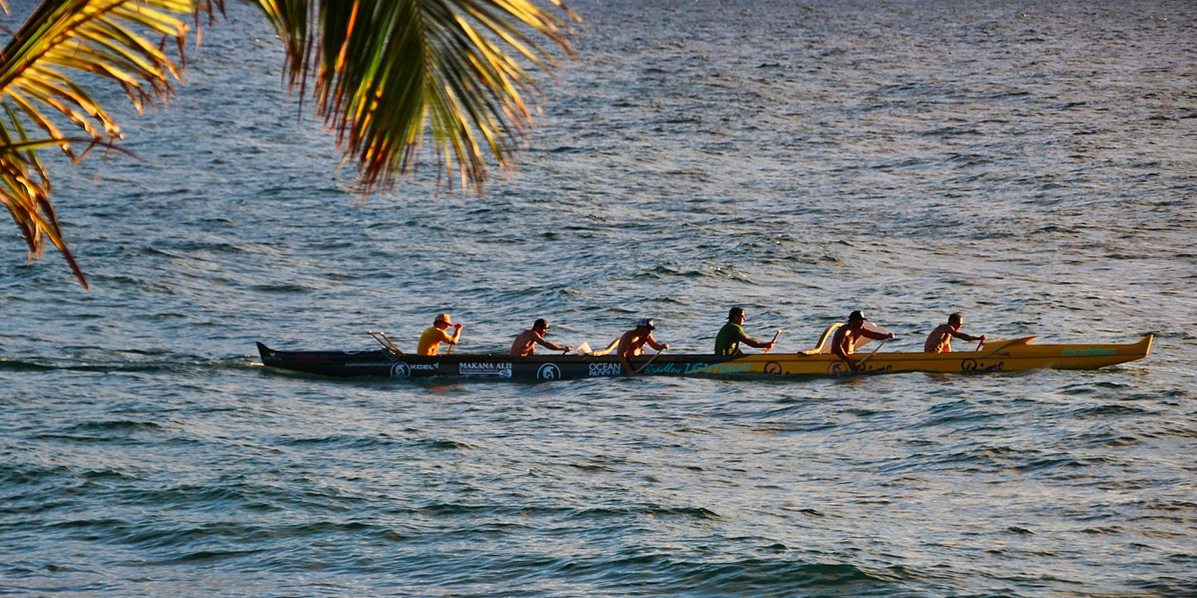
From its origins in navigating between the Polynesian islands to the modern competitive sport, we take a look at how outrigger canoeing or va'a has spread around the world, highlighting its major competitive events in Hawaii, Tahiti and Europe, along with the sport's most influential athletes and teams.
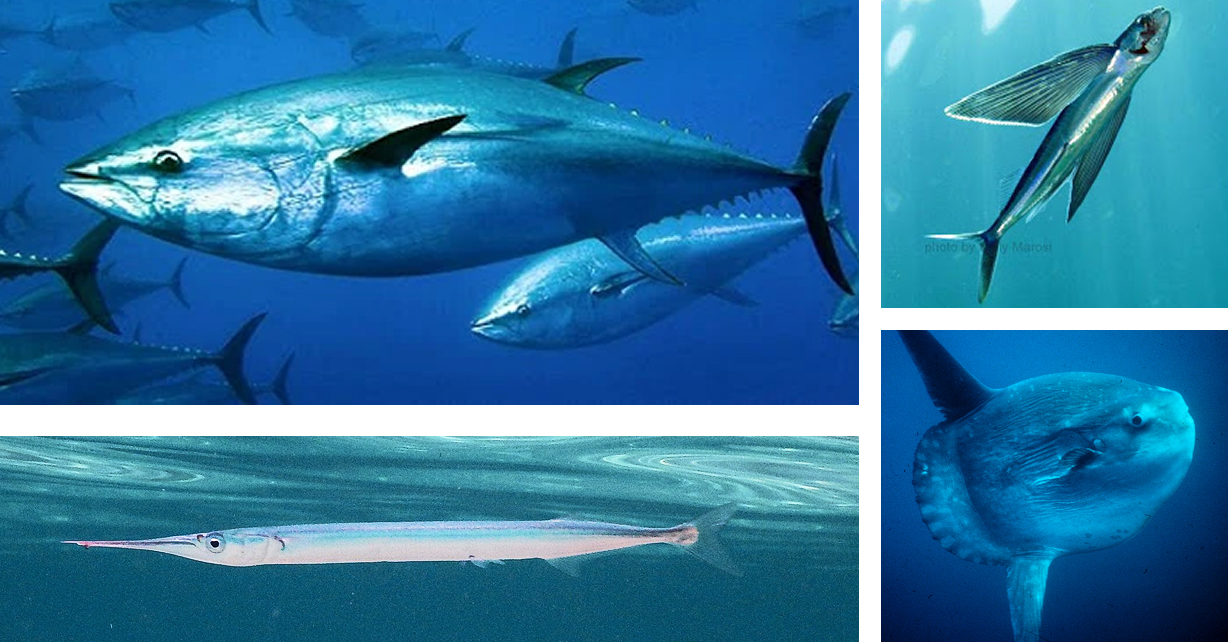
Parte de la magia de hacer deporte en el mar, ya sea en kayak, canoa, SUP, o remo, son los encuentros con la vida marina, que incluye una rica diversidad de peces en las aguas de Badalona. Aunque estamos cerca de la ciudad, de vez en cuando aparecen peces más grandes o poco comunes, como atunes enormes saltando del agua, el espectacular pez luna, el majestuoso pez espada, y el elegante pez volador.
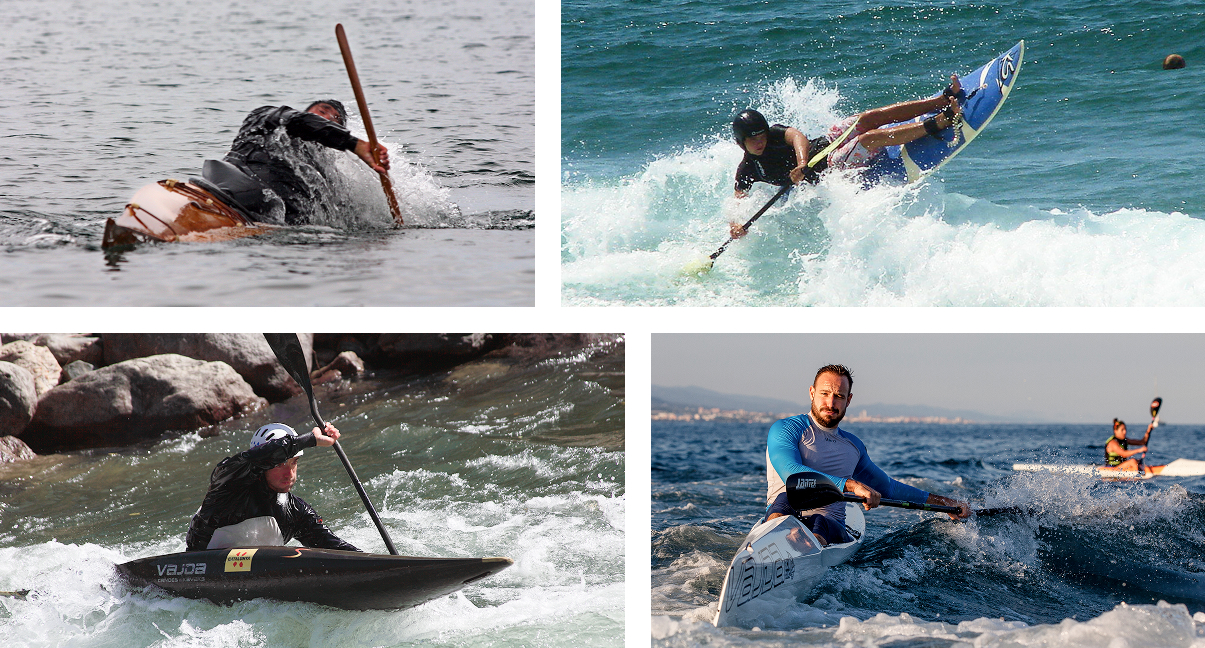
Si usas una pala de doble hoja y mueves tu bote hacia adelante, es un kayak... ¡Descubre las diferentes disciplinas de kayak en aguas tranquilas, aguas bravas, mar abierto y surf! En este artículo enumeramos 12 tipos distintos de kayaks que incluyen surfski, slalom, descenso, kayak polo, wave ski y más.

Barcelona Caiac is a paddling school and sports club based in the Port of Badalona.
Founded in 2012, Barcelona Caiac has been pioneering ocean sports in Catalonia, being the first to establish a learning centre for surfski and outrigger canoe paddling, along with being the long-time base of a well-established group of traditional sea kayakers.
Situated in the sheltered waters of the Port of Badalona, we serve the ocean paddling community in the wider Barcelona & Maresme area.

Moll Lima, Port Esportiu de Badalona
Carrer d'Eduard Maristany, s/n,
08912 Badalona, Barcelona
info@barcelonacaiac.com


